ChatGPT for NLP Free course with Certificate
ChatGPT for NLP
 4.51
Beginner level
0.75 learning hr
4.51
Beginner level
0.75 learning hr
Enrol now for this free ChatGPT for NLP course and gain insights from our expert instructors. Learn text summarization techniques, master the steps involved, and unlock the potential of ChatGPT for generating concise summaries.




About this course
Learn NLP and text summarization with GPT-5 refined prompts, enabling accurate, coherent, and context-aware language analysis for practical applications. In this course, we'll take you on a journey to learn NLP application using the power of ChatGPT. First, we'll provide you with a comprehensive introduction to text summarization, explaining its importance and real-world applications. You'll learn how summarization techniques can condense large volumes of text into concise and meaningful summaries. Next, we'll guide you through the basic steps of text summarization, breaking down the process into manageable chunks. We'll cover everything from data preprocessing to feature extraction and model selection, ensuring you have a solid foundation.
But here's where it gets exciting! We'll dive deep into leveraging ChatGPT for text summarization. You'll explore how this cutting-edge language model can generate accurate and coherent summaries, revolutionizing the way we extract key information from text. By the end of this course, you'll have the knowledge and skills to implement text summarization using ChatGPT effectively. Enrol now and embark on this transformative learning journey with us!
Course outline
Introduction to Text Summarization
This module provides an overview of the Text Summarization Techniques which are essential for condensing large volumes of text into concise summaries.
Basic Steps for Text Summarization
In this module, you will learn text summarization techniques: preprocessing, sentence/word extraction, and clean text data using tokenization, stop word removal, etc.
Text Summarization using ChatGPT
In this module, you will learn text summarization using ChatGPT, implement Python codes in Colab Notebook for hands-on experience, and explore the various functions and approaches.
Text Summarization - Summary
In this module, you will get a recap of the main points and key information from the course content along with key takeaways.
Get access to the complete curriculum once you enroll in the course
 4.51
4.51






 India
India
 India
India

 Nigeria
 India
India

What our learners enjoyed the most
Skill & tools
68% of learners found all the desired skills & tools
Frequently Asked Questions
Will I receive a certificate upon completing this free course?
Is this course free?
How long does it take to complete this Free ChatGPT for NLP Course?
ChatGPT for NLP is a 1.0-hour long course, but it is self-paced. Once you enrol, you can take your own time to complete the course.
Will I have lifetime access to the free course?
Yes, once you enrol in the course, you will have lifetime access to any of the Great Learning Academy’s free courses. You can log in and learn whenever you want to
Will I get a certificate after completing this Free ChatGPT for NLP Course?
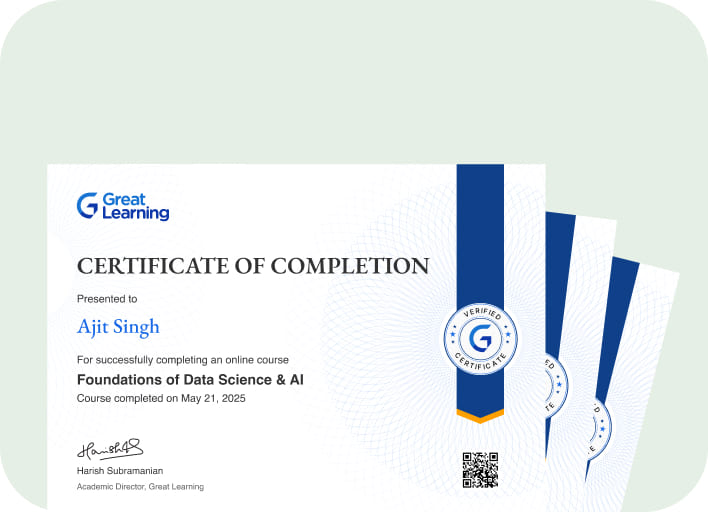
Yes, you will get a certificate of completion after completing all the modules and cracking the assessment.
How much does this Free ChatGPT for NLP Course cost?
It is an entirely free course from Great Learning Academy.
Is there any limit on how many times I can take this free course?
No. There is no limit. Once you enrol in the Free ChatGPT for NLP Course, you have lifetime access to it. So, you can log in anytime and learn it for free online.
Who is eligible to take this Free ChatGPT for NLP Course?
You need to have an understanding of the Basics of Python Programming, since this course contains a module related to Python Codes.
Become a Skilled Professional with Pro Courses
Gain work-ready skills with guided projects, top faculty and AI tools, all at an affordable price.
 PRO
PRO






.jpg)








.jpg)

.jpg)
.png)

.png)
.png)
.png)
.png)
.png)
.png)
.png)
.png)
.png)


.png)
.png)
.png)
.png)


.png)
.jpg)
.jpg)
.png)
.png)


.jpeg)
.jpg)

 (1).jpg)
.png)
.png)

.png)
.png)
.png)
.jpg)


.png)


 (1).png)


.png)
.png)

Recommended Free ChatGPT courses
 FREE
FREE
 FREE
FREE
 FREE
FREE

 FREE
FREE

Similar courses you might like
FREE
 FREE
FREE
 FREE
FREE
 FREE
FREE

Related Artificial Intelligence Courses

-

Johns Hopkins University
Certificate Program in AI Business Strategy10 weeks · Online
Know More
-
Walsh College
MS in Artificial Intelligence & Machine Learning2 Years · Online
Know More
-
MIT Professional Education
No Code and Agentic AI12 Weeks · Online · Weekend
Learn from MIT FacultyKnow More






Relevant Career Paths >

Other Artificial Intelligence tutorials for you
ChatGPT for NLP
ChatGPT, an advanced Natural Language Processing (NLP) model, represents a significant breakthrough in the field of AI and language generation. Developed by OpenAI, ChatGPT is based on the powerful GPT-3.5 architecture, trained on a vast corpus of text data. It possesses the ability to understand and respond to human language, making it an invaluable tool for a wide range of applications.
NLP is a branch of AI that focuses on the interaction between computers and human language. It aims to enable machines to understand, interpret, and generate human-like text. ChatGPT takes this concept to a new level by providing a conversational interface, allowing users to engage in dialogue with the model. One of the most remarkable aspects of ChatGPT is its capacity to understand context. It can maintain coherence and continuity in conversations, comprehending nuanced questions and providing meaningful responses. By leveraging its extensive training on diverse sources, ChatGPT possesses a broad knowledge base encompassing various domains and topics.
ChatGPT has proven to be highly versatile and adaptable, thanks to its ability to handle both specific queries and open-ended discussions. Users can seek concise information, such as definitions, explanations, or factual data. Conversely, they can engage in more exploratory conversations, benefiting from the model's creativity and ability to generate diverse and engaging responses. OpenAI has made significant efforts to ensure the safety and ethical use of ChatGPT. Through a two-step deployment approach, they have created a "sandbox" environment to gather user feedback and identify potential risks. This iterative process allows for ongoing improvements and safeguards against potential issues, such as biased or harmful outputs.
The potential applications for ChatGPT are vast and span various industries and sectors. In customer service, ChatGPT can provide instant and personalized support, addressing frequently asked questions and resolving common issues. It can assist in language translation, helping bridge communication gaps across cultures and languages. Additionally, ChatGPT can aid in content creation, generating drafts, suggesting ideas, or proofreading written work. Researchers and developers can utilize ChatGPT to prototype and test ideas, accelerating the development process for new NLP applications. It can serve as a virtual assistant, helping users with tasks such as scheduling, organizing information, or conducting research. Furthermore, ChatGPT can be integrated into existing platforms and services, enhancing user experiences and enabling more natural and intuitive interactions.
As with any technology, ChatGPT also poses certain challenges. While it can generate coherent and contextually appropriate responses, it may occasionally produce incorrect or nonsensical answers. Additionally, biases present in the training data can manifest in its outputs, highlighting the need for ongoing refinement and bias mitigation techniques. To address these challenges, OpenAI encourages user feedback to identify and rectify issues. By actively involving the user community, OpenAI aims to improve the model's accuracy, safety, and reliability over time.
ChatGPT has demonstrated immense potential, revolutionizing the way we interact with AI systems. Its conversational abilities, adaptability, and vast knowledge base make it a powerful tool for a wide range of NLP applications. As ongoing research and development continue, we can expect ChatGPT to become even more refined, reliable, and indispensable in various domains, ushering in a new era of human-AI interaction.