
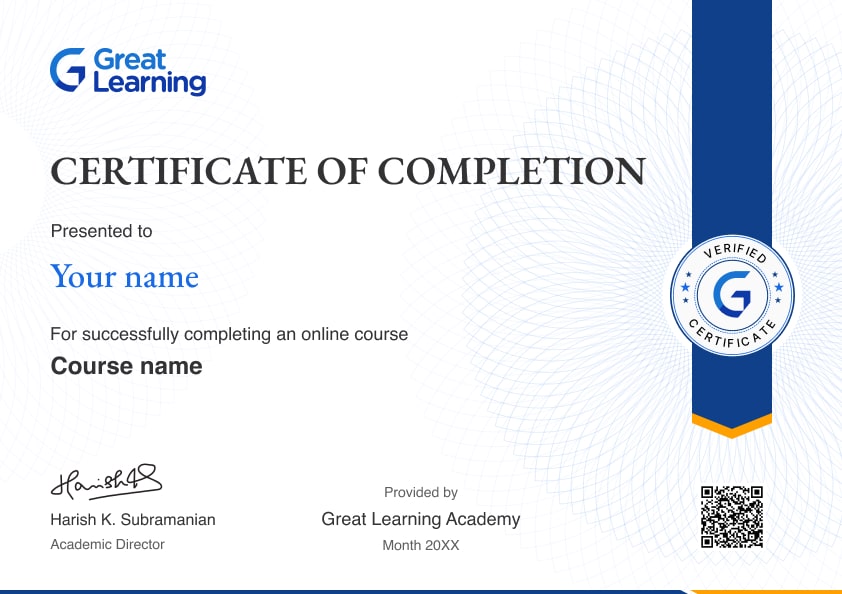
Earn a certificate & get recognized
Leadership Skills for Beginners
 4.62
Beginner level
1.5 learning hrs
4.62
Beginner level
1.5 learning hrs
Unlock your leadership potential with our complimentary course, laying the groundwork for a transformative leadership journey. Seize this opportunity to embark on your pursuit of leadership excellence.




About this course
Leadership Skills for Beginners is a foundational course that introduces individuals to the essential principles of leadership. This free course is Designed for beginners, the program covers topics such as leadership fundamentals, key skills and strategies, career development, team management, and decision-making. Through practical exercises and real-world examples, participants will gain the knowledge and confidence needed to start their leadership journey. Whether aspiring to lead in the workplace or in other areas of life, this course equips beginners with the fundamental skills and insights to become effective leaders. Join us on this empowering journey and unlock your leadership potential today.
Course outline
Overview of Leadership
Gain a foundational understanding of leadership principles and concepts to navigate the dynamics of effective leadership.
Leadership Skills and Strategies
Explore essential skills and strategic approaches for successful leadership, emphasizing adaptability and communication.
Leadership Skills for Career Development
Develop leadership capabilities crucial for advancing in your career, focusing on self-awareness and professional growth.
Leadership Skills for Team Management
Acquire practical techniques to lead and inspire teams, fostering collaboration and achieving collective goals.
Leadership and Decision-Making
Get access to the complete curriculum once you enroll in the course
 4.62
4.62








 India
India
 India
India
 India
India
 India
India


 India
India

What our learners enjoyed the most
Skill & tools
62% of learners found all the desired skills & tools
Frequently Asked Questions
Will I receive a certificate upon completing this free course?
Is this course free?
What are the prerequisites required to enrol in this Free Leadership Skills for Beginners course?
You do not need any prior knowledge to enrol in this Leadership Skills for Beginners course.
How long does it take to complete this Free Leadership Skills for Beginners course?
It is a 1.0 hour long course, but it is self-paced. Once you enrol, you can take your own time to complete the course.
Will I have lifetime access to the free course?
Yes, once you enrol in the course, you will have lifetime access to any of the Great Learning Academy’s free courses. You can log in and learn whenever you want to.
Will I get a certificate after completing this Free Leadership Skills for Beginners course?
Yes, you will get a certificate of completion after completing all the modules and cracking the assessment.
How much does this Leadership Skills for Beginners course cost?
It is an entirely free course from Great Learning Academy.
Is there any limit on how many times I can take this free course?
No. There is no limit. Once you enrol in the Free Leadership Skills for Beginners course, you have lifetime access to it. So, you can log in anytime and learn it for free online.
Become a Skilled Professional with Pro Courses
Gain work-ready skills with guided projects, top faculty and AI tools, all at an affordable price.
 PRO
PRO









.jpg)
.png)






.jpeg)


.png)
.png)
.jpg)

.png)
.png)
.png)
.png)
.png)
.png)
.png)







.png)
.png)
.png)
.png)


.png)
.jpg)
.jpg)
.png)
.png)



.png)
.png)
.jpg)


.png)
.png)
.jpg)
 (1).jpg)
.png)
.jpg)




.png)





 (1).png)






.png)
.png)


Recommended Free Management courses
 FREE
FREE
 FREE
FREE
 FREE
FREE
 FREE
FREE

Similar courses you might like
FREE
 FREE
FREE
 FREE
FREE
 FREE
FREE

Related Management Courses

-

Great Lakes Executive Learning
PGP in Strategic Digital Marketing6 Months · Online · Weekend
Dedicated Career SupportKnow More


Relevant Career Paths >



Leadership Skills for Beginners
Leadership is a skill that can be developed and honed over time. Whether you're aspiring to lead a team, take on a leadership role in your community, or simply enhance your personal leadership abilities, there are several key skills and principles that are crucial for beginners to grasp.
1. Effective Communication
Effective communication is the cornerstone of leadership. As a beginner, it's important to understand that leadership is not about giving orders but about conveying your ideas, vision, and expectations clearly and concisely. Practice active listening, use body language effectively, and ask for feedback to improve your communication skills.
2. Vision and Goal Setting
Great leaders have a clear vision and the ability to set achievable goals. Develop a vision for what you want to achieve and break it down into actionable, measurable goals. This will not only guide your own actions but also inspire and motivate others to follow your lead.
3. Decision-Making
Leaders often face tough decisions. Developing effective decision-making skills is essential. Evaluate the pros and cons of different options, consider the long-term consequences, and be willing to make choices even in the face of uncertainty. Decision-making is a skill that improves with experience.
4. Adaptability
The ability to adapt to changing circumstances is a hallmark of strong leadership. Be open to new ideas, be willing to pivot when necessary, and embrace change as an opportunity for growth. Beginner leaders should avoid rigidity and instead cultivate adaptability.
5. Empathy and Emotional Intelligence
Understanding the emotions and perspectives of those you lead is critical. Practice empathy by putting yourself in others' shoes, and work on developing emotional intelligence to navigate the complexities of human interactions. Recognize the impact your actions and decisions have on others.
6. Delegation
Delegation is about entrusting tasks and responsibilities to others. It's important to understand that you don't have to do everything yourself. Effective leaders delegate tasks to team members based on their strengths and capabilities. Trust your team to deliver and offer guidance and support as needed.
7. Accountability
As a leader, you set the tone for accountability. Hold yourself and others responsible for their actions and commitments. Be transparent in acknowledging your own mistakes and learning from them. Encourage a culture of accountability within your team or organization.
8. Confidence
Confidence is a key leadership trait, but it's important to strike a balance. Display self-assuredness, but avoid arrogance. Confidence should be rooted in your knowledge, skills, and the ability to admit when you don't know something while remaining open to learning.
9. Motivation and Inspiration
Leaders inspire and motivate those around them. Set a positive example through your actions and attitude. Encourage your team with praise and recognition, and provide support to help them reach their potential.
10. Problem-Solving
Leaders encounter challenges regularly. Develop strong problem-solving skills by breaking complex issues into smaller, manageable parts. Collaborate with your team to find innovative solutions and be prepared to learn from both successes and failures.
11. Team Building
Leaders often work within teams, so building a cohesive and productive team is a critical skill. Understand the strengths and weaknesses of team members and leverage them effectively. Encourage open communication and collaboration among team members.
12. Time Management
Effective leaders must manage their time efficiently. Prioritize tasks, set deadlines, and avoid procrastination. Time management helps ensure that you can focus on strategic aspects of leadership and not get bogged down in minutiae.
13. Integrity
Integrity is the foundation of trust and respect. Be honest, ethical, and consistent in your actions and decisions. Your integrity will earn you the trust of those you lead.
14. Resilience
Leadership can be challenging, and resilience is key to overcoming setbacks and adversity. Develop the ability to bounce back from failures, learn from them, and keep moving forward.
15. Continuous Learning
Leadership is an ongoing journey of growth. As a beginner, recognize the importance of continuous learning. Seek out mentors, read books on leadership, attend workshops, and stay open to new ideas and perspectives.
In conclusion, leadership skills are not innate but can be cultivated and refined over time. As a beginner, focus on developing these fundamental skills, and remember that effective leadership is about inspiring and empowering others to achieve common goals. Leadership is a journey, and the more you practice and learn, the better you will become at guiding and influencing those around you.